Leo
17 August 2026 14:58
1
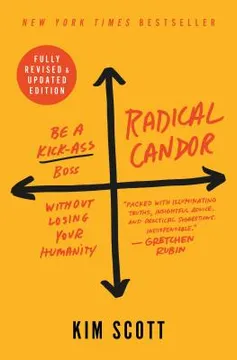
Radical Candor is about caring personally and challenging directly, about soliciting criticism to improve your leadership and also providing guidance that helps others grow. It focuses on praise but doesn’t shy away from criticism―to help you love your work and the people you work with.
We will be reviewing the book on 10th September at 4pm.
Radical Candor
This book is the August 2026 Yokoten Book Club book of the month.
NoelW
10 September 2026 15:37
3
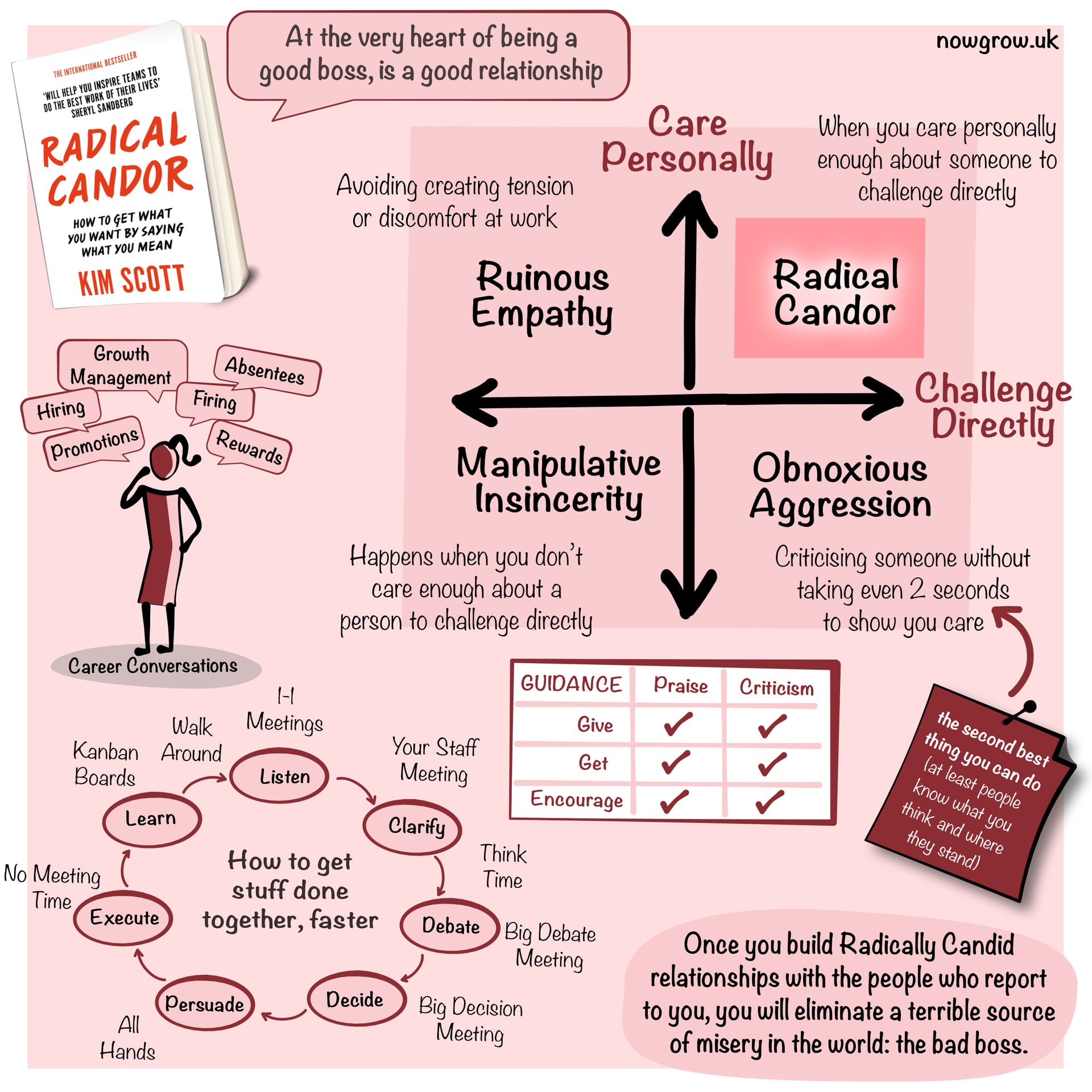
Here’s a visual summary I created a few years back
3 Likes
Alan
16 September 2026 07:53
4
This was the summary of the book club conversation 10th Sept 2026
Reactions to Radical Candor
Published 2017, but felt older; doing the rounds in offices around 2017-18
Early chapters felt like name-dropping (Sheryl Sandberg, Larry Page, Steve Jobs), which put some readers off
Consensus: genuine substance underneath, but easy to misread as a license to be blunt
The “ruinous empathy” framing resonated as a useful counterweight
Quote highlighted (p.60): “Treating people fairly requires that you know them well enough to understand why they aren’t thriving”
Designed for people managers specifically, not general workplace communication guidance
That intent got lost, which explains a lot of the misinterpretation
Compared to Crucial Conversations : similar spirit, but missing the “shared pool of meaning” scaffolding
Book feels like it’s selling European management norms (coaching, corridor conversations) to an American audience
For some, that bar is just baseline good management
Key Themes Discussed
Rock stars vs. superstars distinction landed well
Acceptance that not everyone wants to climb; mastering a role is valid
Peter Principle came up: people promoted into roles they don’t enjoy or excel at
Craig Larman’s point: developers promoted away from code when they just want to stay in it
Psychological safety as a prerequisite, not a byproduct
Book describes what needs to happen but lacks concrete tools for getting there
“Getting Started” section language felt prickly (“prove you can take it before dishing it out”)
Consensus: dangerous to read and implement cold without the relational foundation
Reverse mentoring as a related practice
Senior leaders deliberately seeking feedback from junior colleagues
Encourages vulnerability and surfaces perspectives that wouldn’t otherwise reach the top
ORSC (Organisation Relationship Systemic Coaching) raised as a complementary lens
Framing feedback as “the voice of the system” rather than a personal judgment
Similar to Lego Serious Play: externalizing behavior from the person
Next Book: The Right Kind of Wrong
Amy Edmondson’s more recent book, follows on from The Fearless Organization
Chosen unanimously; links naturally to the psychological safety thread from today