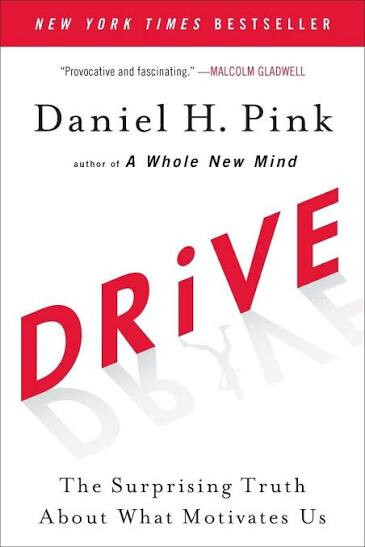
We ran a book club session last week.
I used Granola AI to record the transcript, and also put the transcript through ChatGPT.
Below are both summaries from the call
Granola AI Notes
Drive: How It Holds Up
- General consensus: still valuable, but shows its age and feels idealistic in places
- Autonomy/mastery/purpose framework well-known, but most people stop at the TED talk summary
- Key question throughout: does it stand up against AI, remote work, and neurodiversity?
- Extrinsic vs. intrinsic binary feels too simplistic now
- Wealth influencers and side hustles show extrinsic motivation is still a major driver
- Neurodiversity means motivation is far more individual than the book allows for
- Routine task flowchart in the book now reads differently: default response to routine work is automation, not enrichment
- Book structure praised: chapter summaries, cocktail party summary, digestible format
- Notably individual-focused: little on team dynamics, which is where most people actually work
Autonomy, Reward, and the Gap Between Theory and Practice
- “If-then” reward structures still dominate corporate performance processes, despite the book’s arguments against them
- Genuine recognition often lost when it becomes mandatory and measured
- Being targeted on using predefined recognition systems strips out authenticity
- Simple “thank you” or “well done” can be more effective than vouchers or formal schemes
- Autonomy in practice often means “choose your method, not your outcome,” not true autonomy
- Real autonomy requires upfront agreement that the plan is adaptable, not just that execution is flexible
- Colin’s point: did we agree to adaptability, or just to plan v1?
- Team health checks (Spotify-style) consistently flag autonomy as amber or red
- Post-COVID regression noted: tighter guardrails, increased monitoring, command-and-control creeping back under pressure
- Pressure triggers reversion to control, even where autonomy was previously granted
- Motivation-within-motivation problem: managers wanting to reward people authentically, but being measured on system usage instead
- Risk of acting to satisfy the system rather than the people or the outcome
Purpose, Mastery, and Next Steps
- Purpose resonated most strongly for several participants
- Team-level purpose (why does this team exist, how does it contribute?) seen as critical
- Individual purpose is separate and much harder: e.g. someone saving to open a coffee shop
- Danger of pressuring people to perform purpose in a neurotypical, visibly enthusiastic way
- Mastery discussion: what does it mean if mastery is defined as pre-described neurotypical behaviours?
- Needs to be understood at individual level, not imposed as a uniform standard
- OKRs and org strategy often too abstract to attach meaning to; individual health checks on autonomy, mastery, and purpose suggested as a more human alternative
- Management 3.0 / Delegation Poker came up as complementary frameworks
- Motivation 3.0 (Pink) and Management 3.0 (Appelo) seen as cross-fertilised ideas from the same era
- Large organisations (e.g. Deutsche Bank, Barclays) face scale problem: global performance systems hard to change
- Suggested approach: start small, experiment, build out rather than systemic overhaul
- Risk of not changing: filtering out diverse thinking and optimising for the status quo
Next Book and Logistics
- Next book: Radical Candor
- Acknowledged as a longer read; may need more than the usual session time
- No specific framing agreed; group will read through different lenses and see what emerges
- Bounce by Matthew Syed also recommended
- Reviews: submit via Yokedon link; Alan will plant a tree per review submitted
- Same time next month confirmed
ChatGPT Notes
The book club discussion on Daniel Pink’s Drive focused less on simply recapping the book and more on asking whether its core ideas — autonomy, mastery and purpose — still hold up in today’s workplace. The group generally agreed that the principles remain useful, but that the modern working environment is much more nuanced than the book sometimes suggests.
Key themes from the discussion
1. Drive still resonates, but now feels somewhat simplistic
Several people had originally read Drive around 10–15 years ago. At the time its ideas felt groundbreaking; revisiting it now, the distinction between extrinsic motivation being problematic and intrinsic motivation being preferable felt too binary. Modern motivation is affected by factors Pink could not fully have anticipated, including AI, job insecurity, social media, side hustles, remote working and greater awareness of neurodiversity.
2. AI changes the conversation about routine work
One particularly interesting observation concerned Pink’s decision tree about when rewards might be appropriate. The book asks whether a task is routine and, if it is, whether it can be made more challenging, varied or connected to a wider purpose.
Today there is another obvious question: if a task is routine, can we automate it?
AI and automation potentially allow people to spend less time on mundane administrative work and more time on challenging and meaningful activities — which could actually create greater opportunities for autonomy, mastery and purpose.
3. Organisations talk about autonomy more than they necessarily provide it
A major theme was the difference between saying employees have autonomy and genuinely giving it to them. Organisations may tell teams:
You can achieve the outcome however you like…
…but then impose strict processes, reporting requirements, governance, meetings and approved ways of working.
The group felt that organisations can revert towards command and control when things become difficult. Remote working following COVID may also have contributed to tighter guardrails and increased monitoring because some organisations struggle with trust when employees aren’t physically visible.
An important distinction emerged between autonomy over the method and autonomy over how an outcome is achieved. Genuine autonomy may require agreeing from the beginning that plans can adapt as circumstances change, rather than allowing employees freedom only while everything follows the original plan.
4. Recognition doesn’t have to mean formal rewards
There was considerable discussion around recognition. Simple human appreciation — saying thank you, acknowledging someone’s contribution or telling someone they did a good job — can sometimes be more meaningful than vouchers, prizes and formal corporate recognition schemes.
Formalising recognition too much can actually undermine it. Examples were discussed where managers were effectively measured on how frequently they used corporate recognition schemes. At that point, recognition risks becoming something performed to satisfy the organisation’s system rather than something genuinely intended for the employee.
5. Motivation is personal
There isn’t one reward or motivational approach that works for everyone. Some people value public recognition, experiences or social status; others would much rather receive money, flexibility or something personally useful.
This links particularly strongly to neurodiversity. Organisations need to understand individuals rather than assuming everyone demonstrates motivation, engagement or enthusiasm in the same way.
6. Purpose needs to mean something to the individual
The group strongly supported the importance of purpose but distinguished between:
· organisational purpose;
· team purpose; and
· individual purpose.
Employees should understand why their team exists and how it contributes to the organisation, but their personal purpose doesn’t necessarily need to be the organisation’s purpose.
For someone, their job might genuinely be a means of funding something else they care about — such as eventually opening their own coffee shop. That doesn’t necessarily make them less valuable or motivated at work. Understanding what actually matters to the individual could help organisations create much more meaningful working environments.
7. Drive focuses heavily on individuals, but motivation exists at team and organisational levels too
One limitation identified was that the book can feel very individual-focused. Much modern work happens within interconnected teams and systems.
The conversation therefore developed the idea of motivation operating at several levels:
Individual → Team → Organisation
This led to an interesting connection with Management 3.0, particularly its emphasis on designing environments in which teams can succeed rather than simply trying to manage individual employees. The group discussed the possibility of effectively designing a system of motivation for a team, which requires first understanding the individuals within it.
One particularly useful practical idea
A strong idea emerging from the conversation was to adapt team health checks to explore autonomy, mastery and purpose directly.
For example, conversations with individuals or teams could explore:
Autonomy: Where do you want more freedom or decision-making authority?
Mastery: What do you actually want to become better at — technically, collaboratively, professionally or even personally?
Purpose: What matters to you, and how does your work connect with that?
Rather than assuming what motivates someone, the organisation could use these questions to understand them and shape the working environment accordingly. The group recognised, however, that conversations like this require trust and cannot simply be imposed as another corporate process.
Overall conclusion
The discussion suggested that Drive** has aged better as a starting point than as a complete model of motivation**. Autonomy, mastery and purpose remain highly relevant, but today’s workplace requires more attention to individual differences, neurodiversity, teams, AI, remote working and the organisational systems surrounding employees.
Perhaps the strongest takeaway was that organisations can unintentionally design systems that undermine the very motivation they are trying to create. Recognition systems, performance management, governance and targets can encourage people to satisfy the system rather than do what is best for the individual, team or desired outcome.
The group therefore moved beyond simply asking “How do we motivate people?” towards a more useful question:
“How do we create an environment in which different people and teams can find the autonomy, mastery and purpose that motivates them?”
For the next book club, the group settled on Radical Candor** by Kim Scott**, with the intention of meeting again at roughly the same time the following month.